Intro 0:00
Many aspire to reach the upper echelon of the healthcare industry, but few are able to successfully navigate the corporate ladder. C-Suite Partners sits down with international healthcare executives, asking the tough questions and unpacking the personalities of the top industry leaders. Welcome to the Boardroom.
Michael Murray 0:35
Dr Mohaymen, thank you so much for being a part of C-Suite Partners’ “In the Boardroom”. I think all the viewers would like to understand a little bit about your current role and who you’re working with. Are you able to tell us a little about that, please?
Mohaymen Abdelghany 0:44
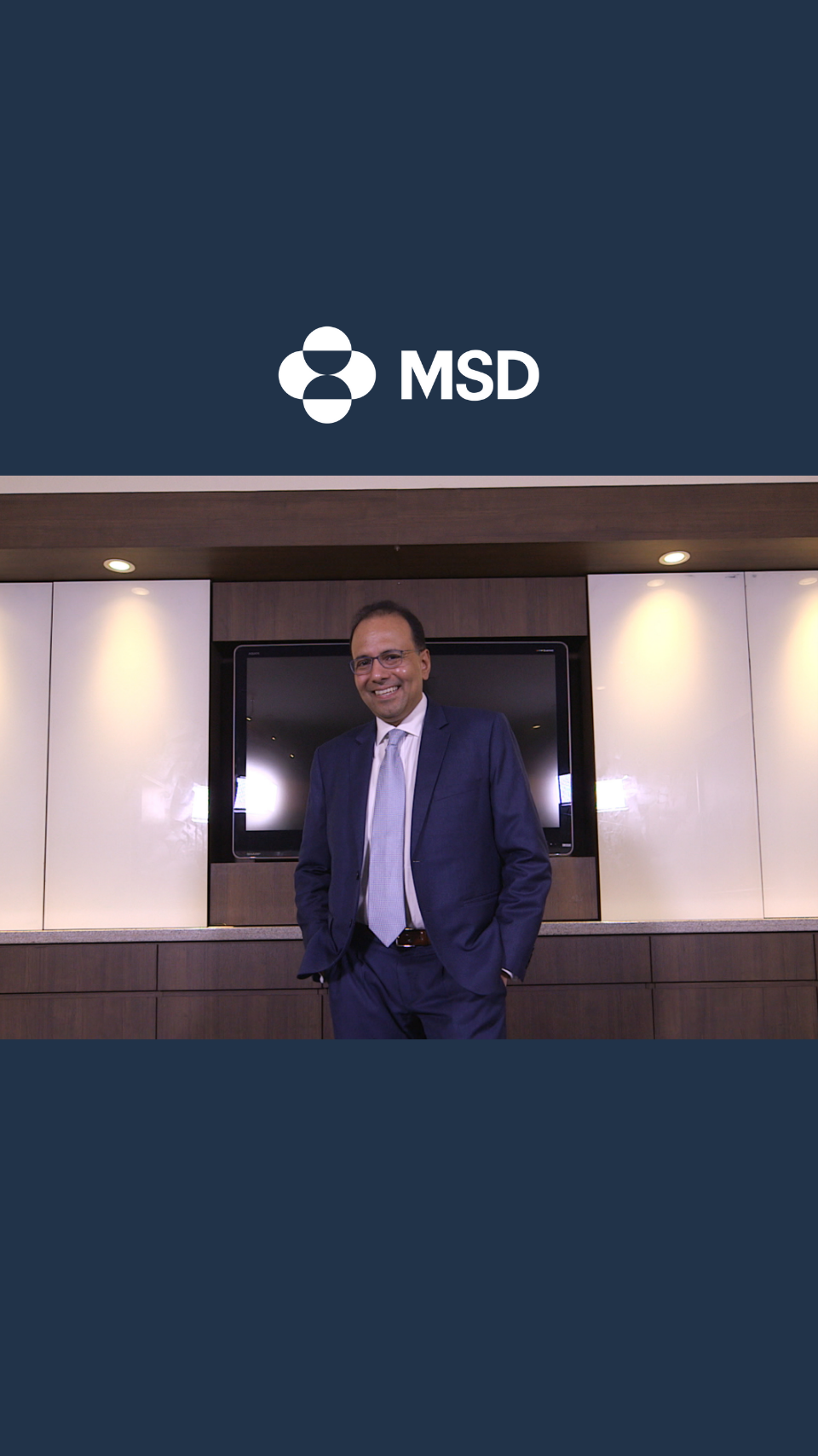
Thank you for having me, Michael. I’m Dr Mohaymen Abdelghany. I’m a physician by background, originally from Egypt, and I’ve been in healthcare for the last 30 plus years.
Michael Murray 0:55
Wow.
Mohaymen Abdelghany 0:55
So, I was privileged to run across clinical as an anaesthetist, working as an anaesthetist, for quite a long time of my life. I did anaesthesia and intensive care, and then I did a shift towards healthcare management and business, where I started to run hospitals and health systems. Currently, I’m the Group CEO for Fakeeh Health in the UAE, and we are having one large hospital, acute care 300 beds hospital in Silicon Oasis, supported by a network of clinics across Dubai, which are eight clinics, spanned across Dubai, from Jumeirah to Motor City to Jumeirah Park to Silicon Oasis, and Dubai Mall.
Michael Murray 1:37
Wow. There must have been a moment where you were studying, and then the practicality of what you were doing. Did you remember kind of a weight of responsibility? Because it’s such an important part of the system, right? Do you remember something that shaped your thinking as a doctor?
Mohaymen Abdelghany 1:52
Yeah, I think what makes a difference is, as a doctor, I continue to practice, I continue to, you know, advance my skills. But the moment where I realised that there is something else that I need to explore, I was thinking that hospitals is okay. I mean, a doctor should be able to run a hospital, But then I was thrown to, okay, take more responsibility towards managing a department. I realised I don’t have the tools.
Michael Murray 2:21
Right.
Mohaymen Abdelghany 2:22
I don’t know how to manage it well. And it’s not like taking care of a patient at the bedside. It’s different. And this is where it started to flash that, oh, if you are to do this, you need to get yourself backed up. You need to get trained. So, this is the moment where I felt no, it’s not enough to be a doctor, to run hospital or health system. So I started to pursue, you know, more and more. I did a master’s in healthcare management. I did several leadership programs, at Harvard, at NCAD, started to learn the business world, the other part of which, which we as clinicians tend not to be fully comprehensive of.
Michael Murray 2:59
Sure.
Mohaymen Abdelghany 3:00
In my role, it has always been to bridge this gap between management and clinicians, between business and patient care, and making sure that, yes, you run a very high-quality system in terms of patient care and patient experience and clinical excellence. Yet, it’s financially feasible, sustainable, and can grow to the next level.
Michael Murray 3:19
Given you’ve worked in, in multiple marketplaces, how’s the relationship with the government as a private enterprise? Do they support? Do they innovate? Do they partner? How do you see that?
Mohaymen Abdelghany 3:32
Well, I’m privileged that I have worked across different geographies and the way the UAE, and in particular Dubai, is taking the growth, not only in healthcare by the way, I mean you look at different sectors.
Michael Murray 3:47
Sure.
Mohaymen Abdelghany 3:48
The growth and the support of private players is absolutely, I mean, it’s one of its kind. The government steps are far ahead what we, what we are moving, In many communities, private sector is more advanced. Here in Dubai, sometimes the government is much more advanced.
Michael Murray 4:10
Right, that’s interesting.
Mohaymen Abdelghany 4:11
And it’s actually a driving force so that the private sector follows. And healthcare is not far from that. So, if you want to start a service, you get full support. If you want to expand a service, you get full support. If you want to do something that’s even innovative or unique, as long as you have the right arrangements, the right platform, the right people, you get full support. More important is shared decision making. That’s very key. Because we are involved in different platforms, like the Dubai Private Hospital Group, where I sit on the board. We’re involved with the government and decision making. Like when they come with new regulations, with new laws, they involve the private sector. And that’s very, very, very important for sustaining this growth.
Michael Murray 5:02
And in terms of innovation, is there anything that you’re currently doing that that you could share with us?
Mohaymen Abdelghany 5:09
I’m personally very, very passionate about technology, but we need just to make sure that it’s not like running after all shiny objects because there are hundreds of thousands of shiny objects that have come. But which ones that make relevance? Which one that are appropriate for your service? This is an important question. We use drones, for example. So drones are now used for delivering medication. We’re testing this. We tested it. It works well. So we deliver medications with drones to the neighbouring areas, as much as the drone range allows. We are starting also to do blood sample collection with the drones from ours – because we have clinics. So in the clinics where the range permits, the drone can collect the blood, bring it to the hospital to save us the hassles of the transport. And it’s like point A to point B, very accurate, very timely, you know. And we cannot do this without the support of the government. The government is very support. All the authorities are very supportive to do this testing, and we’re happy to adopt once it proves successful, happy to adopt. So, these are examples of where we have the support from the government.
Michael Murray 6:21
And if we can kind of redirect the conversation back to yourself, I’m interested in – your trajectory has been obviously specialist, you’ve become an executive, you’re running hospitals in a group. Do you remember a specific mistake in your career? Is there anything that shaped your thinking.
Mohaymen Abdelghany 6:41
The beauty of mistakes is that you learn from them. And unless you just reflect and have the insight, that will become, you know, a repetitive mistake. So, one of them is being, you know, over cautious sometimes.
Michael Murray 6:55
Okay.
Mohaymen Abdelghany 6:55
You’re so protective, so you tend to lose opportunities, and you could have grown faster. And the other chances are where you just plan and don’t execute well. So this is also a very important mistake. So the planning is well, but in a boardroom. The execution in the real, within the market reality, fails. So, these are two, I mean, they are two opposite examples, but I have seen them both. So we planned, for example, an acquisition, expecting that it will work very fast. In reality, no. You have transitions, transitional challenges during an acquisition. You need to build up some time. So, it’s not like a plug and play. And this is a huge learning because in the next ones, it was managed well.
Michael Murray 7:50
And if you had to describe your career in one sentence, what would it be?
Mohaymen Abdelghany 7:55
It’s passion about patients and passion about clinicians.
Michael Murray 7:59
What a great way to end it. I’ve had a great conversation with you and thank you so much for being a part of “In the Boardroom”.
Mohaymen Abdelghany 8:04
Thanks.